
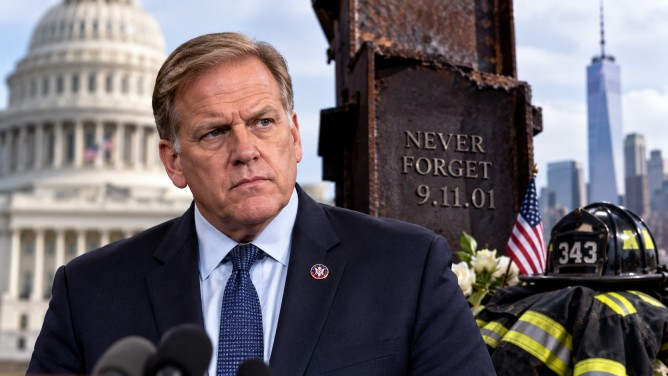
Republican candidate for the Michigan Senate, Mike Rogers, is facing renewed scrutiny over his past votes on healthcare and benefits for 9/11 first responders and survivors. This comes as he criticizes his Democratic opponent, Abdul El-Sayed, for previous remarks concerning the September 11 attacks. Rogers has pointed to past social media posts by El-Sayed, claiming they indicate a sympathetic stance towards the attacks, a suggestion that has been contested by critics.
Rogers’ legislative history reveals that he voted against the 2010 James Zadroga Act, which allocated funds for healthcare and monitoring of 9/11 responders and survivors who were exposed to hazardous conditions at Ground Zero. During the legislative discussions, Rogers expressed concerns about the financial implications of the bill on the nation’s budget. Despite his opposition, the bill passed through the House, although it faced resistance from Rogers and other Republicans.
In addition to this, Rogers’ voting record shows his opposition in 2002 to additional funding for veterans’ healthcare and first responders, which was part of broader legislation aimed at mitigating the financial impact of 9/11 on New York’s educational institutions. Over the years, he has also opposed several initiatives concerning funding, pensions, and other benefits for first responders. John Feal, a 9/11 responder and advocate for responder healthcare benefits, has criticized Rogers’ stance, labeling it a betrayal. Feal noted that he had direct conversations with Rogers about the Zadroga legislation during its consideration in Congress.
Further controversy surrounds Rogers following a campaign email in which he claimed to have personally seen Osama bin Laden’s body after the US raid in Pakistan. This statement has been questioned as Rogers was neither present in Pakistan during the operation nor in the White House Situation Room, where senior US officials followed the raid.
The unfolding controversies around Rogers come as he and El-Sayed compete in a tightly contested race for Michigan’s open Senate seat, a race that could significantly influence the balance of power in Congress.