
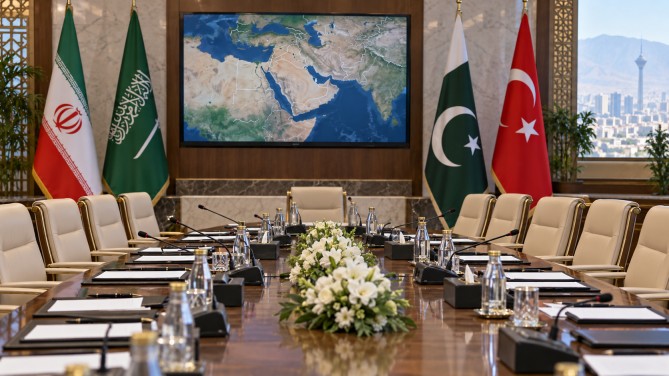
Iran is poised to host a significant regional security meeting in Tehran, drawing senior officials from Saudi Arabia, Pakistan, and Turkey. The discussions aim to address escalating tensions and seek diplomatic solutions to conflicts across the Middle East. Key attendees include Saudi Defence Minister Khalid bin Salman, Pakistan’s army chief General Asim Munir, and Turkish intelligence chief Ibrahim Kalin, alongside Iranian security representatives.
The meeting underscores intensified diplomatic efforts to enhance regional stability and de-escalation. Saudi representatives have highlighted that the talks are part of broader initiatives to foster dialogue among nations impacted by ongoing conflicts, with additional mediation efforts being led by Qatar and Pakistan.
Amid heightened regional tensions involving Iran, the United States, and Israel, the strategic Strait of Hormuz remains a focal point of concern due to its significance for global oil and gas shipments. The security of this vital route is crucial for international trade and energy stability.
The conflict in Yemen further exemplifies the regional unrest, as Iran-backed Houthi forces continue assaults on Saudi Arabia. In retaliation, the Saudi-led coalition has targeted Houthi military capabilities, including missile launchers and storage facilities. Recent aggressive acts have seen Saudi Arabia intercept ballistic missiles aimed at Riyadh, with the Houthis claiming responsibility for attacks on the capital’s airport and oil infrastructure.
In response to these threats, Saudi Arabia has enhanced its air defenses, with Greece maintaining its deployment of the Patriot missile defense system in the kingdom. This bolstered defense posture reflects ongoing concerns about the security of critical infrastructure and regional stability.
The Tehran summit presents an opportunity for regional powers to engage in dialogue aimed at conflict containment and increased security cooperation. However, the success of these discussions will hinge on the ability of participating nations to reach actionable diplomatic agreements to address the complex disputes facing the region.