
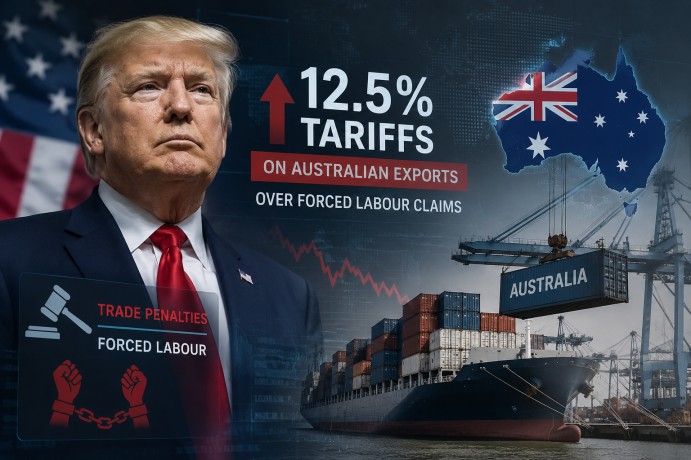
The United States has implemented a new 12.5% tariff on numerous Australian exports due to concerns about Australia’s efforts to keep goods produced through forced labor out of supply chains. The Australian government has vehemently opposed the move, describing the tariffs as unjustified and a violation of the Australia-U.S. Free Trade Agreement. Trade Minister Don Farrell emphasized that Australia maintains some of the world’s most stringent laws against forced labor and modern slavery, urging the U.S. to promptly rescind the tariffs.
The tariff affects a broad spectrum of Australian exports, yet exempts essential categories such as beef, gold, several agricultural products, aircraft parts, and specific mineral and industrial goods. Australian officials have criticized the U.S. decision, arguing that it lacks substantial evidence and cautioning that it could adversely impact bilateral trade relations. Business groups and industry leaders also condemned the tariffs, labeling them as unfair and harmful to exporters.
The introduction of these tariffs comes amid the Trump administration’s broader expansion of trade measures targeting numerous countries over concerns about enforcing policies against forced labor. Australian officials have maintained that the U.S. action could set a damaging precedent and negatively influence future engagements and trade agreements between the two nations.
Critics within Australia argue that the tariffs are not only unjustified but also detrimental to the nation’s economy, potentially straining relations with a key trading partner. The move has sparked significant debate and concern among Australian exporters who fear the financial impact and long-term repercussions on trade dynamics.