
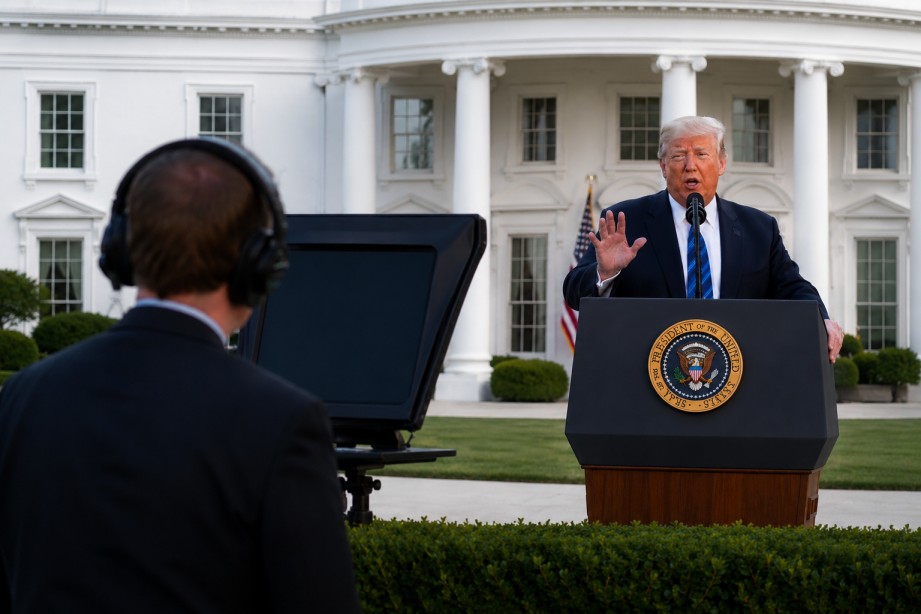
In a significant development at the White House, President Donald Trump’s long-serving teleprompter operator, Gabriel Perez, has been placed on unpaid administrative leave. This action follows serious allegations that Perez exploited his advance access to presidential speeches for financial gain by betting on an online prediction market. White House Press Secretary Karoline Leavitt expressed disappointment over the situation, underscoring the administration’s commitment to maintaining strict ethical standards. As a result, a different operator was brought in to manage the teleprompter for Trump’s most recent televised address.
Reports indicate that Perez allegedly amassed over $100,000 by trading on Kalshi’s prediction markets. These platforms allow users to gamble on the likelihood of specific words or topics being included in public speeches. The unusual trading activity was detected by the platform itself, which then referred the case to federal regulators for a thorough investigation.
Authorities are now delving into whether Perez’s actions constituted insider trading, using privileged information to secure a competitive edge in the prediction markets. This case arises at a time when prediction markets are under increasing scrutiny, prompting regulators to heighten their oversight in response to concerns over potential insider trading incidents.
The allegations against Perez highlight the growing complexities surrounding prediction markets, which are becoming more popular and influential. As these markets continue to attract attention, questions around ethical boundaries and the potential for misuse of information are increasingly coming to the fore, prompting a closer examination by regulatory bodies.