
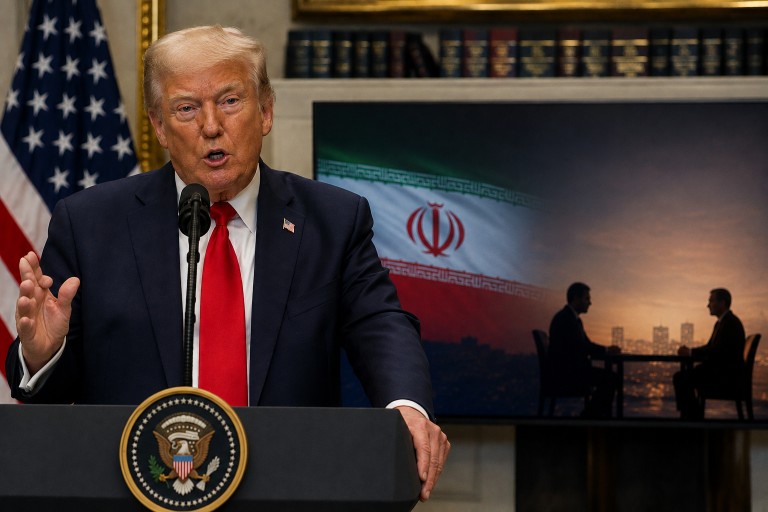
President Donald Trump revealed that the United States was on the brink of launching what he described as the “biggest attack since World War II” against Iran. However, the operation was halted following appeals from Gulf countries and Iran, which sought to allow diplomatic negotiations to proceed. Speaking aboard Air Force One, Trump mentioned that Saudi Arabia, the United Arab Emirates, Qatar, and Iran themselves reached out to Washington, urging a pause in military action as they believed a diplomatic agreement was attainable.
The potential deal at the heart of these negotiations aims to reopen the strategic Strait of Hormuz and advance efforts towards Iran’s denuclearisation. Trump emphasized the preference for a diplomatic resolution rather than resorting to military measures. He stated that the U.S. is currently withholding any military strike to give these talks a chance to unfold.
Trump took to Truth Social to reiterate his stance, stating that any forthcoming agreement must ensure the immediate reopening of the Strait of Hormuz and address the nuclear threat posed by Iran. He confirmed that while the planned attack has been suspended for now, the decision is contingent upon the success of the ongoing negotiations.
In his comments, Trump underscored the importance of pursuing a diplomatic path, indicating that military action remains a last resort. The situation highlights the intricate balance of power and diplomacy in the region, as the U.S. navigates its next steps amidst international calls for peace and stability.
The unfolding events underscore the critical nature of the negotiations, with major regional players and the U.S. vested in reaching a peaceful resolution. The outcome of these discussions holds significant implications for the stability of the Middle East and the broader geopolitical landscape.